3 Dubai-Born Businesses Taking the World by Storm in 2026
- aegraon
- May 23
- 6 min read

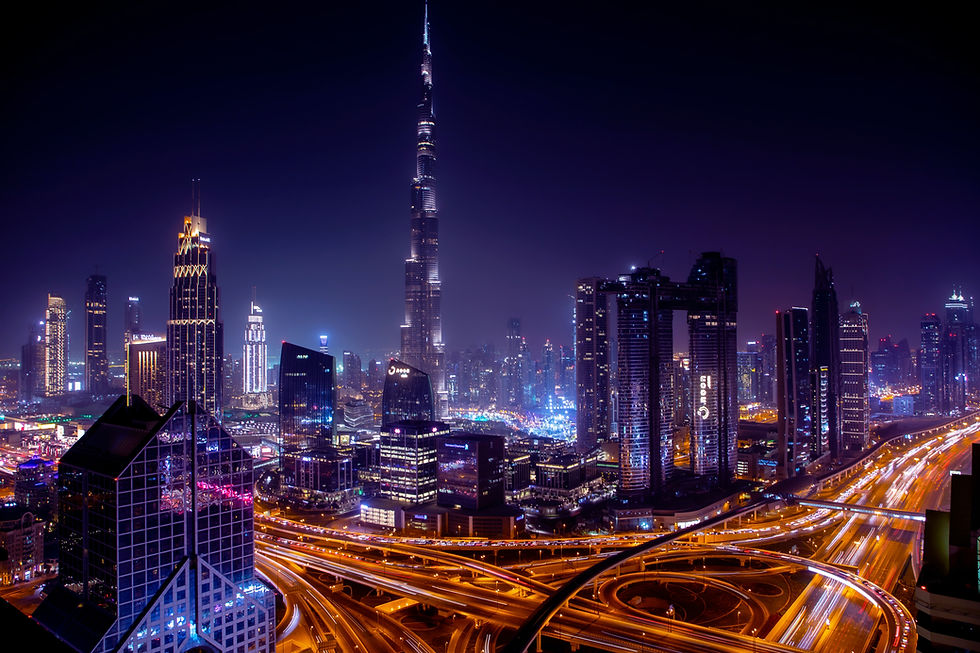
Dubai has long been billed as a launchpad for global ambition. But in 2026, three homegrown businesses are making that promise impossible to ignore. From cloud kitchens to fintech to fine dining, Kitopi, Tabby, and GAIA have each taken something born on Dubai's streets and built it into a globally recognised brand — proving that the city is no longer just a destination for international companies. It is producing them.
Here is how they did it, what it means for entrepreneurs watching from the sidelines, and why the conditions that made their success possible are more accessible today than ever before.
1. Kitopi: The Cloud Kitchen That Conquered the GCC — and Is Now Going Further
When Mohamad Ballout co-founded Kitopi in Dubai in January 2018, the concept was simple but radical: let restaurants sell food through delivery without running their own kitchen. Kitopi would manage the infrastructure, the operations, and the logistics. The restaurant would just send the recipes.
Seven years later, Kitopi has become one of the most closely watched food technology companies in the world.
In early 2026, Kitopi raised $50 million in growth capital led by EvolutionX — a platform backed by Temasek and DBS Bank — marking the investment group's first GCC commitment and a significant vote of confidence in the Dubai-born brand. The raise follows a pivotal milestone: Kitopi is now profitable, reporting revenue of $165.7 million in 2024, a 32% increase over the prior year, after walking away from its lower-margin kitchen-as-a-service model to focus on owning and scaling its own food brands.
What Kitopi Got Right
The company operates over 200 locations across the UAE, Saudi Arabia, Qatar, Bahrain, and Kuwait. It employs more than 6,000 people, runs customer experience centres in Dubai and Amman, and maintains an engineering hub in Krakow, Poland — evidence of a company thinking far beyond the Gulf.
CEO Mohamad Ballout has been clear about what comes next: "What began as a local presence has evolved into a regional platform, and we're now taking that momentum global." International franchising is the vehicle, and the destination is markets well beyond the Middle East.
The Dubai Advantage: Kitopi launched and scaled inside a regulatory environment built for innovation. Dubai's food service licensing, free zone infrastructure, and access to investor capital gave the company the foundation to prove its model before taking it to the world.
2. Tabby: The Dubai Fintech That Became the Middle East's Most Valuable Private Company
Tabby was founded in Dubai in 2019 by Hosam Arab — who had previously built Namshi, the region's leading fashion e-commerce platform — and Daniil Barkalov, a former Careem technologist. Their thesis was straightforward: consumers across the Arab world wanted to spread purchases over time, but the banking infrastructure to support that simply did not exist in a region where credit card penetration remained low.
What followed is one of the most dramatic growth stories in MENA fintech history.
By early 2025, Tabby had reached 15 million users and 40,000 merchants, with $10 billion in annual transaction volume. In February 2025, the company raised $160 million at a $3.3 billion valuation — cementing its status as the most valuable fintech in the Middle East and North Africa. By April 2025, that valuation had already risen to $4.5 billion following a new investment round.
Beyond Buy Now, Pay Later
Tabby has deliberately moved beyond its BNPL origins. The company is building a full financial services ecosystem — savings products, credit tools, and merchant financing — targeting the hundreds of millions of underserved consumers across the Arab world. Its Saudi subsidiary alone reported a net profit of $55 million on revenue of $378 million for the year ending December 2025.
An IPO on the Saudi Exchange is widely expected, with HSBC, JP Morgan, and Morgan Stanley all confirmed as advisers.
The Dubai Advantage: Tabby launched in Dubai's DIFC ecosystem, which gave it access to one of the world's most progressive fintech regulatory sandboxes, a deep pool of regional investors, and the credibility to expand into Saudi Arabia with institutional backing from day one.
3. GAIA: The Dubai Restaurant That Is Redefining 'Made in Dubai' Luxury Globally
Not every global success story begins in technology. GAIA, the Greek-Mediterranean fine dining concept created by Dubai-based Fundamental Hospitality, has done something remarkable in the restaurant world: it has taken a brand born in the UAE and made it one of the most sought-after dining experiences on multiple continents.
I n 2025, GAIA served nearly one million guests globally, recording approximately 967,000 covers across its locations. In 2026, Fundamental Hospitality announced a $200 million global expansion programme — the most ambitious fine dining rollout ever launched from the Middle East.
A Global Footprint Built From Dubai
By end of 2026, GAIA will operate across eight international destinations, including its North American debut in Miami — which Hollywood Reporter named among the city's buzziest restaurant openings of 2025 — plus confirmed locations in Greece, Turkey, Saudi Arabia, and Bahrain. The group is targeting 10 million cumulative visitors by close of 2026.
What makes GAIA's story particularly striking is its approach to people. Rather than hiring local teams in each new market, Fundamental Hospitality has been relocating its Dubai-based staff to international destinations — including seasonal pop-ups in St Tropez and Bodrum — directly exporting the culture, standards, and hospitality DNA built in the UAE.
Why the World Is Paying Attention
GAIA is listed on the World's 50 Best Discovery platform. Its Dubai flagship attracts a global clientele. And it has done it all without diluting its identity or compromising on quality — a template that the luxury hospitality world is watching closely.
The Dubai Advantage: Dubai's position as a global tourism hub gave GAIA access to an international customer base before it opened a single location outside the UAE. The feedback loop between a world-class resident diner and a visiting global traveller is one of Dubai's greatest and most underappreciated advantages for consumer brands.
What These Three Businesses Have in Common
Strip back the sectors — food tech, fintech, fine dining — and three patterns emerge across every one of these stories.
1. They solved a real regional problem first. Kitopi fixed broken food delivery economics. Tabby addressed a credit gap in markets where bank accounts were limited. GAIA identified that the world's best hospitality talent was concentrated in Dubai, without a luxury brand to match. Each found a genuine gap before building a business around it.
2. They used Dubai as a testing ground, not just a headquarters. The UAE's combination of a cosmopolitan population, high consumer spending power, and openness to new business models made it the perfect proving ground. International investors and press came to Dubai to see these companies in action — and then followed them to their next markets.
3. They built infrastructure, not just products. Kitopi built its own kitchen network. Tabby built a payment rails ecosystem. GAIA built a hospitality culture and exports it with every new location. None of them were one-product companies chasing a quick exit.
What This Means If You Are Building a Business in Dubai Right Now
The conditions that produced Kitopi, Tabby, and GAIA have not changed — in many ways, they have improved.
The UAE now has over 1.45 million registered companies, with 2,709 new businesses added in Dubai alone in March 2026. UAE tech startups raised $872 million in Q1 2025 — an 865% increase over the same period the previous year. The government's 'Dubai Global' initiative is actively helping homegrown companies expand into 30 priority international markets, with 38 representative offices now open worldwide.
Setting up correctly from the start — choosing the right free zone, structuring for investor readiness, and getting licensing right — is the single most important decision an early-stage founder makes. It is what allows a company to raise, to scale, and eventually to go global without the structural friction that kills momentum at critical moments.
Conclusion
Kitopi, Tabby, and GAIA are not outliers. They are evidence of a structural shift — Dubai is no longer just the place global companies come to expand. It is the place global companies are born.
The ingredients are in place: progressive regulation, deep investor pools, a cosmopolitan consumer base, and a government that moves at startup speed. The question for any founder watching from the outside is not whether Dubai can produce world-class companies. The answer to that is already in.
The question is whether you will be among the ones who build the next one.
Ready to launch your Dubai business with a structure built for global growth?
Aegraon handles company formation, free zone selection, licensing, banking, and visa processing — most clients are fully operational within 7–10 working days. Visit aegraon.com or speak to our Dubai-based team today.


Comments